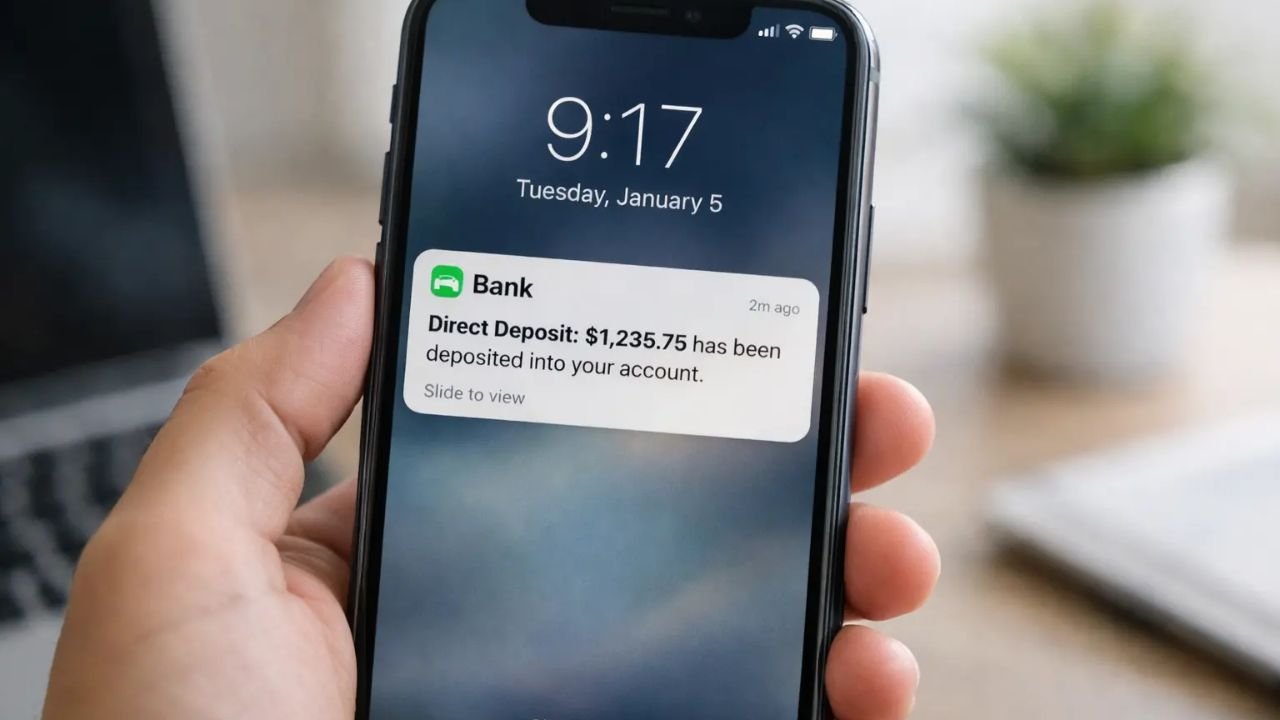
Unexpected deposits can trigger both excitement and concern—especially when the amount comes from a federal agency. Recently, many taxpayers have reported seeing a $1,390 direct deposit labeled from the IRS, prompting urgent questions about eligibility, payment sources, and security risks.
Understanding what this deposit represents and how to verify its legitimacy is essential. Acting quickly—but carefully—can help you protect your finances, confirm eligibility, and ensure you do not miss funds that may rightfully belong to you.

This guide explains the most likely reasons for a $1,390 IRS deposit, how to verify the payment, and what steps to take if something seems incorrect.
IRS $1,390 Direct Deposit: What This Notification Really Means
Receiving a direct deposit from the Internal Revenue Service usually indicates an official payment linked to your tax account or federal benefits.
However, the exact reason for the deposit can vary. It may not always be a new relief payment. In many cases, the deposit represents adjustments or corrections related to previous tax filings.
Most Common Reasons for a $1,390 IRS Deposit

Several legitimate financial events can trigger this payment amount:
- Tax refund adjustments after return processing
- Refundable credit reconciliation, such as earned income-related credits
- Catch-up payments from previously missed benefits
- Amended return adjustments correcting earlier calculations
- Reissued payments from unresolved prior tax cycles
In some cases, state-level adjustments or delayed federal credits can also produce deposits that appear unexpectedly.
Understanding the context behind the deposit helps prevent unnecessary panic and protects against fraud attempts.
How to Verify an IRS $1,390 Direct Deposit Safely

Before spending or transferring funds, verifying the deposit source is critical. Fraudsters often take advantage of confusion surrounding government payments.
Step-by-Step Verification Process
Follow these practical steps to confirm authenticity:
1. Review Your Bank Statement Carefully
Check for the transaction description and trace number. Official federal deposits typically include identifiable source labels.
2. Log Into Your IRS Account
Use the secure tools provided by the Internal Revenue Service to review recent activity.
Look for:
- Posted refunds
- Adjustment notices
- Payment explanations
3. Watch for Mailed Notices
The IRS typically sends written explanations for one-time payments or corrections.
These letters often include:
- Payment reason
- Amount issued
- Tax year affected
4. Compare With Your Expected Refund
If you filed taxes recently, compare the deposit to your anticipated refund amount.
These steps help confirm the payment’s origin before any financial decisions are made.
Who Is Typically Eligible for IRS Deposits Like This
Eligibility depends entirely on the program or adjustment that created the payment.
Most recipients share common eligibility factors.
Typical Eligibility Conditions
You may qualify if you:
- Filed a recent federal tax return
- Provided direct deposit details on your return
- Qualified for refundable tax credits
- Met income eligibility requirements
- Submitted corrections through amended filings
Many taxpayers receive unexpected deposits after automated IRS reviews identify missing credits.
Credits That Often Generate Payments
Some credits commonly associated with deposits include:
- Earned income-based tax credits
- Child-related tax credits
- Recovery rebate-related adjustments
- Low-income tax relief benefits
These credits are often recalculated after processing, which can produce additional refunds.
Quick Eligibility Checklist
Use this checklist to determine whether you may qualify:
- Did you file your most recent tax return?
- Did you claim refundable tax credits?
- Have you received IRS correspondence recently?
- Is your bank account still active and valid?
- Did you amend a previous tax return?
If you answered yes to multiple questions, the deposit may be legitimate and expected.
What to Do If the Deposit Seems Wrong or Missing
Not every unexpected payment is correct. Errors can occur, and fraudulent activity is always possible.
Taking structured action prevents financial loss.
Steps to Take Immediately
If something seems incorrect:
Gather Documentation
Collect:
- Tax returns
- Bank statements
- IRS notices
- Filing confirmations
Check Online IRS Records
Review payment history to confirm transaction details.
Contact Your Bank
If the deposit appears suspicious or incorrect, notify your financial institution immediately.
Report Fraud Concerns
If identity theft is suspected, visit IdentityTheft.gov for official recovery steps.
Acting quickly improves the chance of resolving issues successfully.
How to Claim a Missing Payment
Some taxpayers discover they were eligible for payments but never received them.
Missing payments often require action during the tax filing process.
Common Methods to Recover Missing Funds
You may need to:
- File an amended tax return
- Claim eligible credits on your next return
- Submit reconciliation forms
- Provide updated documentation
Tax professionals can assist with determining eligibility and filing corrections accurately.
Red Flags to Watch for: Protect Yourself From Scams
Fraud attempts frequently increase during periods of federal payment activity. Knowing what to watch for protects your financial security.
Warning Signs of Potential Scams
Be cautious if you receive:
- Text messages claiming IRS deposits
- Emails requesting banking details
- Phone calls demanding verification codes
- Links directing you to unofficial websites
Remember: The IRS does not request sensitive details through unsolicited messages.
Safe Practices to Follow
Protect yourself by:
- Accessing IRS tools directly through official websites
- Avoiding unknown links
- Verifying payments through trusted channels
- Keeping personal information private
Maintaining vigilance reduces exposure to financial fraud.
Real-World Scenario: How a Taxpayer Verified a $1,390 Deposit
Consider a taxpayer named Daniel who filed his tax return early and expected a small refund.
Several weeks later, he noticed a $1,390 deposit in his account labeled from a federal source.
Rather than spending the funds immediately, he:
- Checked his bank transaction details
- Logged into his IRS account
- Reviewed payment history
- Waited for mailed confirmation
Within days, he received an official notice explaining that the deposit resulted from recalculated refundable credits.
Because Daniel followed verification steps, he avoided unnecessary stress and documented the payment correctly for future records.
When to Seek Professional Assistance
Some situations require expert support. If you cannot identify the payment source or believe an error occurred, professional help can provide clarity.
Situations That May Require Assistance
Consider consulting a tax professional if:
- The deposit reason remains unclear
- You suspect identity theft
- An amended return may be required
- Payment amounts do not match IRS records
- You receive conflicting notices
Professional guidance reduces the risk of filing mistakes or overlooking valuable credits.
Why Staying Organized Matters More Than Ever
Maintaining accurate records helps you manage unexpected payments confidently.
Keep copies of:
- Filed tax returns
- IRS correspondence
- Bank transaction records
- Credit calculation summaries
Organized documentation simplifies verification and protects against disputes.
Key Takeaways: Confirm Eligibility and Protect Your Finances
Receiving a $1,390 IRS direct deposit can signal legitimate tax adjustments or financial relief—but verification is essential before taking action.
Remember these critical points:
- Always verify deposits through official IRS records
- Watch for mailed notices explaining payment details
- Never respond to unsolicited financial requests
- Document all transactions carefully
- Seek professional help when needed
By taking methodical steps and staying informed, you protect your financial security while ensuring you receive any funds you are rightfully owed.